The Garden of Maggie Victoria
This series explores memory and female representation through the story of my great-grandmother, forgotten within my family after her early death in 1943.
Following a fast-moving illness, Maggie Victoria took her last breath in northern England during wartime, aged 56. Her husband, my great-grandfather Frank, remarried quickly, and no one – including her children – mentioned her after that. Her story would be erased for decades.
Maggie Victoria would never meet her grandchildren, or her great-grandchildren, of whom I am one. But in scouring rediscovered family archives in 2022, I got to know her ordinary, extraordinary story. She was a mother, wife, proud gardener, devoted friend, a radio aficionado, stubborn patient and much more besides.
Determined to revive my ancestor’s legacy, I set about creating a series integrating photos by my great-grandfather, archival letters and my own contemporary images made in Vancouver, Canada, where I live.
Frank’s images often show his wife in domestic settings. This series reworks scans of those images with my own photographs tracking the changing seasons in Canada. By adding layers, primarily via digital collage, my goal is to connect with Maggie Victoria, and question the male gaze cementing her role in the past. In combining my contemporary colour images with monochrome predecessors, I also aim to contrast two very different eras, and reflect on the changing nature of photography.
Letters written close to Maggie Victoria’s death give a moving insight into the last weeks of a woman dedicated to her family and putting on a brave face. Around her, everyone is doing their best. I have incorporated pieces of those letters into some of the collages.
This project is an attempt to render Maggie Victoria visible, and a call to women to take up space. I have sought to construct new visual narratives from old, unstable accounts. In discussing this project, others have shared with me their own familial tales of loss, mystery or secrecy. Anchored in a personal meditation, the series invites us to consider issues of heritage, identity, grief and the passing of time that affect us all.
The Series
Unfurling
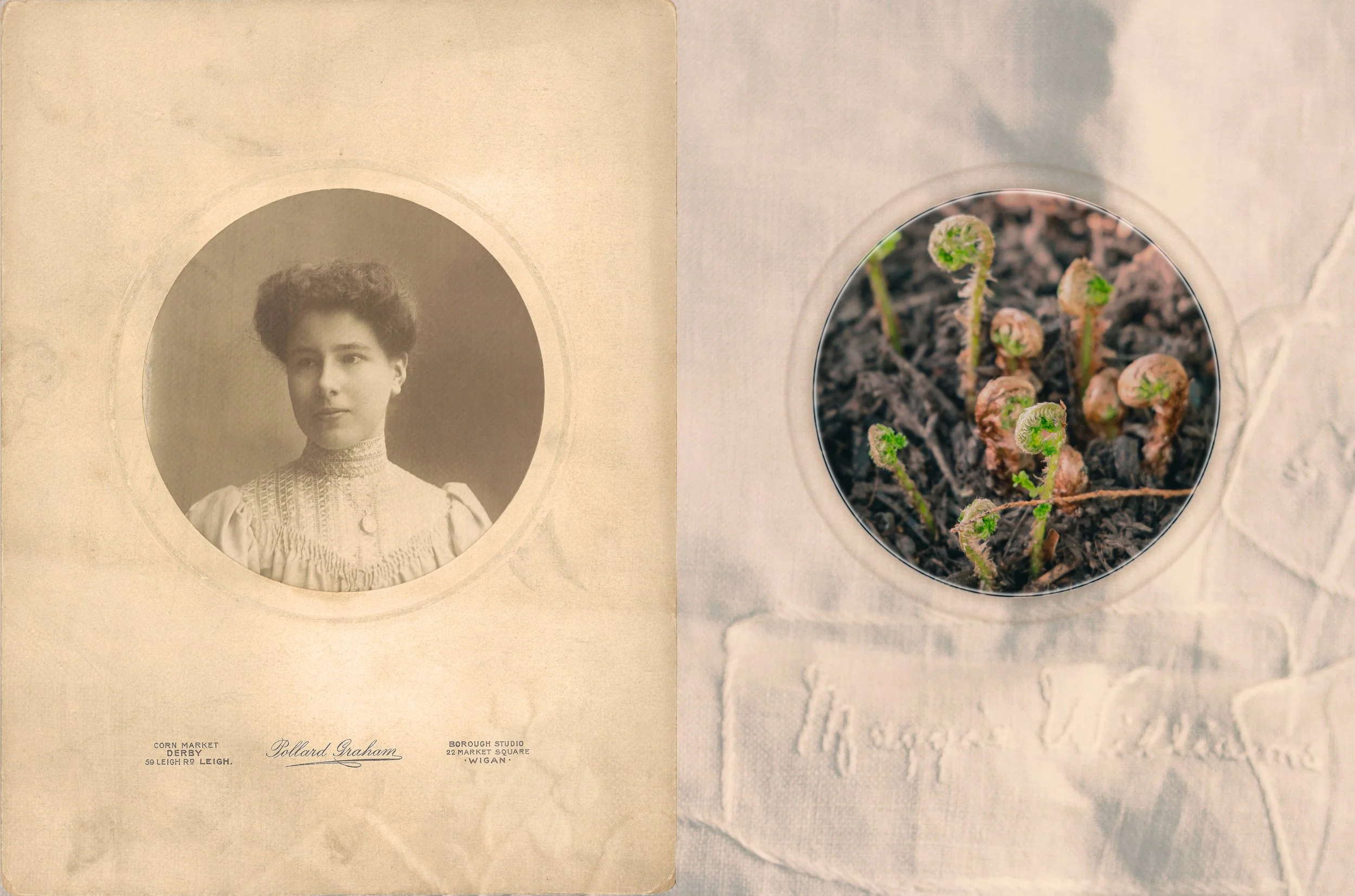
There are few images of Maggie Victoria before her marriage. The ones we do have paint a picture of an upstanding young woman coming of age just after the turn of the 20th Century. A “tailoress” before getting married, she embroidered this tablecloth with the names of friends and family, surrounding her own maiden name. The portrait was shot at a local photographer’s studio - to mark her 21st birthday, we believe.
Just Married

Maggie Victoria married Frank Sellers in Chorley, Lancashire in the midst of World War I. Although we have their marriage certificate recording this fact, we do not have any photos from the wedding. These images mark their engagement. Interestingly, certificates at the time were validated with an actual stamp.
New Life

After their marriage in 1915, Maggie Victoria and Frank went on to have two daughters and a son. On the left is one of the christening dresses passed down the generations - I think I wore this myself. L/h photo by Anne Nixon.
Beach Days
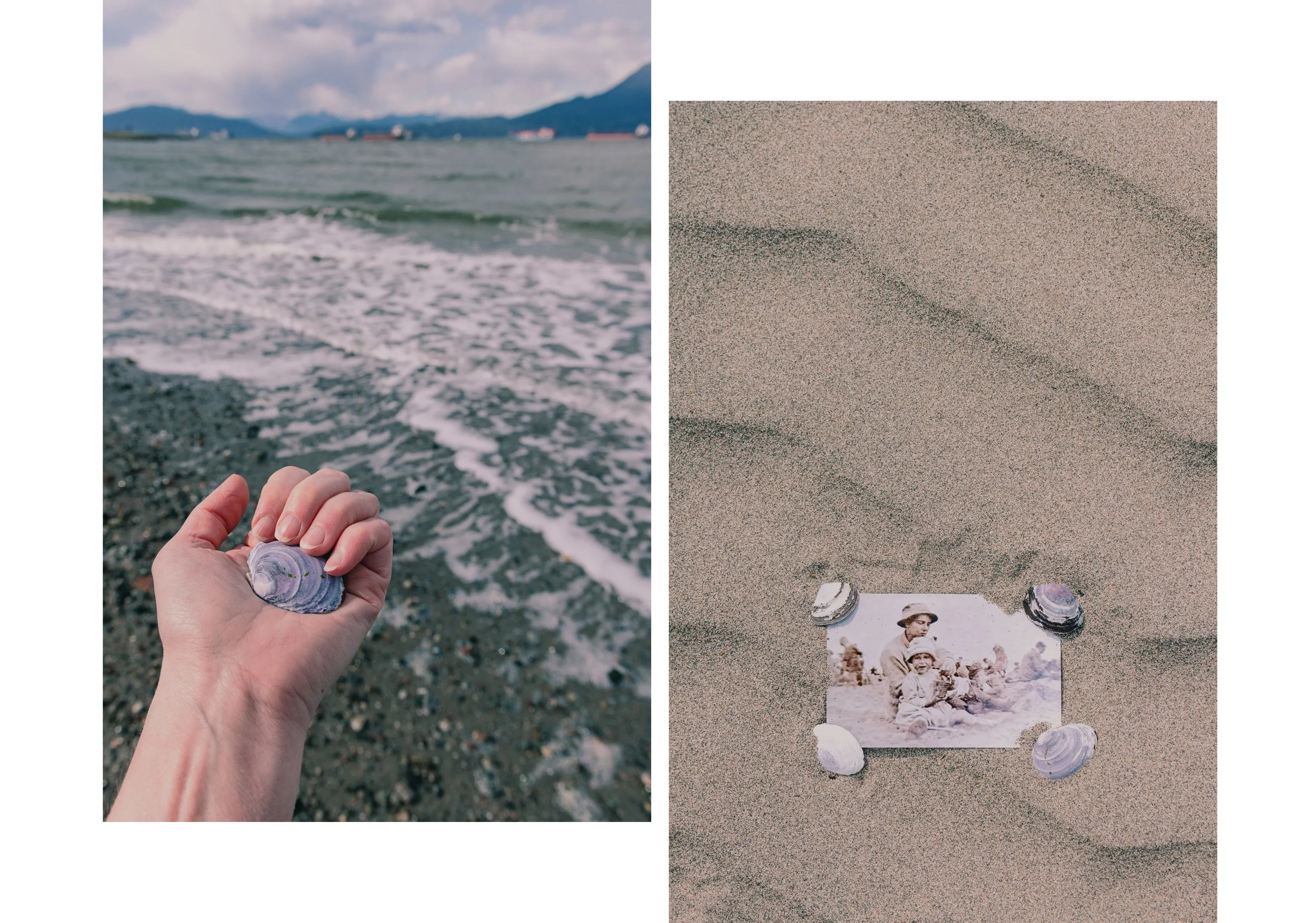
I made these images in Vancouver, on my favourite beach, and hoping Maggie Victoria had enjoyed her own.
Fondest Love From Mother

I was delighted to come across this fun black and white image of my great-grandmother in the mid-1920s blowing bubbles with two of her three young children. "Fondest Love From Mother" was how Maggie Victoria regularly signed letters to her eldest daughter. The new bubbles — many, many bubbles — were blown and captured on a hot summer's afternoon in our garden last year. I incorporated elements of sky and land (the map) to convey the transfer of affection down the generations and across continents.
Flowers In The Sand
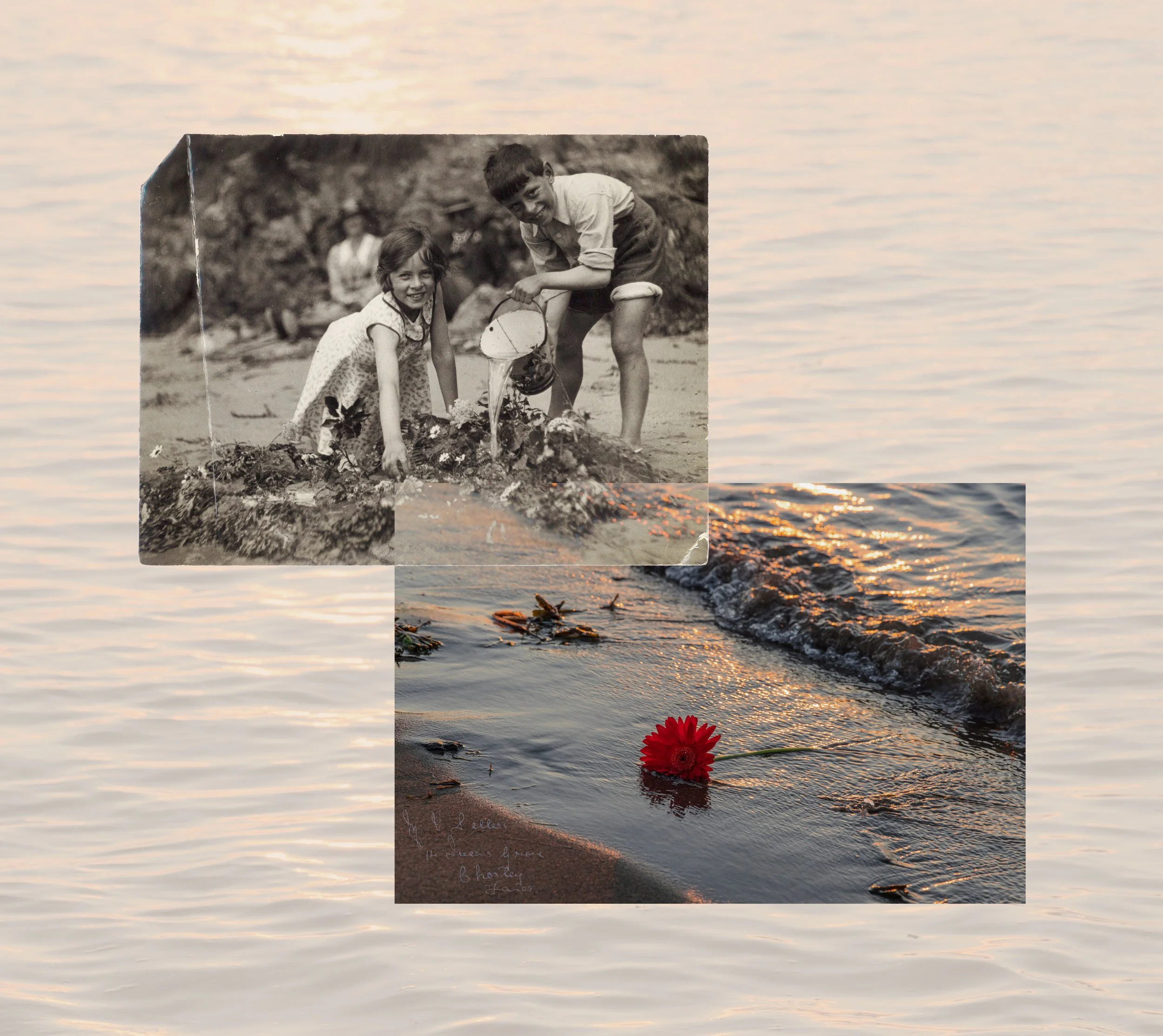
Unusually for this series, we believe that the old beach photo top left was made by Maggie Victoria herself and entered in a photography competition, since her name and address were written in her hand on the back. Those details are now a part of the image I made during an exquisite sunset on Jericho Beach in Vancouver, bottom right. Pictured are my grandmother Doris and great-uncle Brian, her second and third children, making their own flower garden in the sand. I appreciate the flow of water and continuity between the two images.
Teach A Child To Fish

Maggie Victoria and Frank’s three children are pictured on the left “fishing” in the garden, while a younger version of me is “fishing” on holiday with my grandad on the right. Frank’s waterlilies separate us between the decades. What connects us, though, aside from our apparent joy at fishing, is that our parents and grandparents very much valued the benefit of education and made sure we did too. In the case of their two daughters - my grandmother and great-aunt - Maggie Victoria and Frank made sure they studied beyond school and both went on to have careers of their own - quite forward-thinking for the 1930s and 40s. Certainly they had advantages that Maggie Victoria never had, and both parents worked hard for their family. (Photo of a younger me with my grandad by Anne Nixon.)
If We Had Met
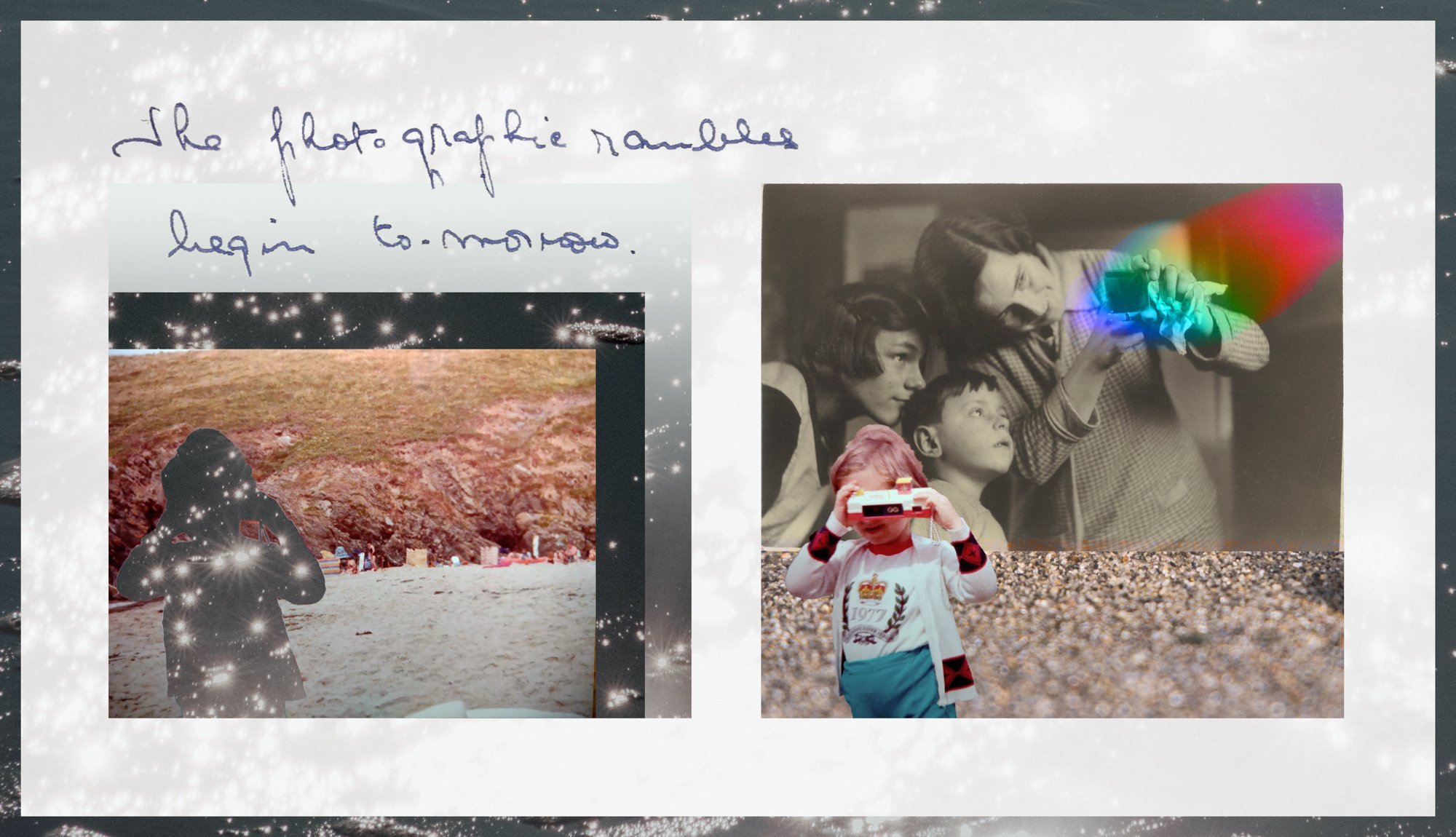
Imagining a scenario where perhaps Maggie Victoria and I might have met one another and bonded over the family love of photography. It features a very young me with my Fisher Price camera, interrupting Maggie Victoria showing two of her children a lantern slide. The text reads: "The photographic rambles begin tomorrow", extracted from one of her letters. The work also incorporates aspects of beach and sea, my favourite places to be.
Changing Tides
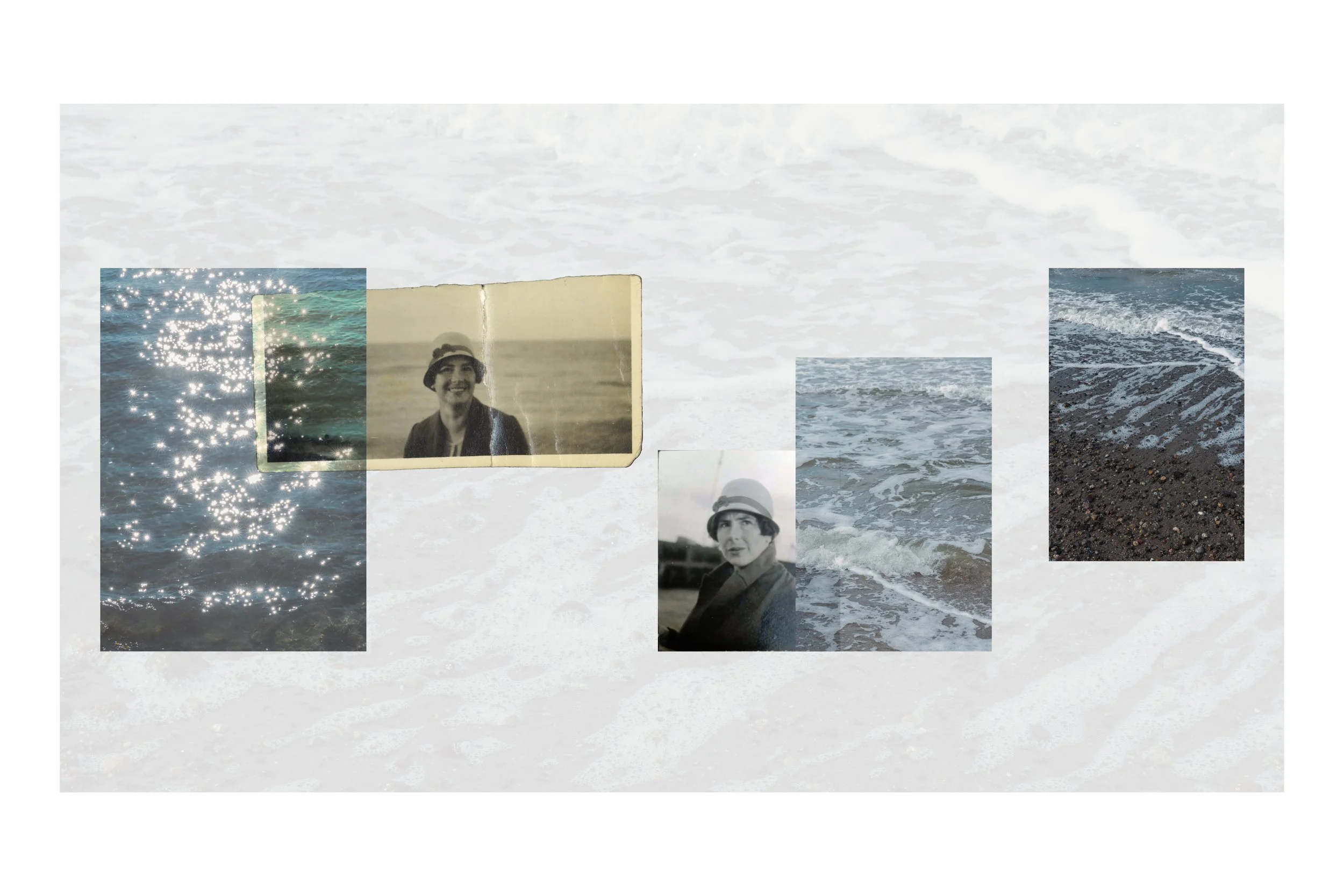
Two very different images of Maggie Victoria taken on the same day at the seaside in the mid-1920s by her husband Frank. One carefree, the other much less so. A pivotal point in her adult life - looking back to happier times, and ahead to troubles both personal and political. I was at first puzzled why the photo of Maggie Victoria smiling (left) would be torn and folded - until my mother pointed out that someone likely kept it with them in their wallet.
You Turn Away From The Sun
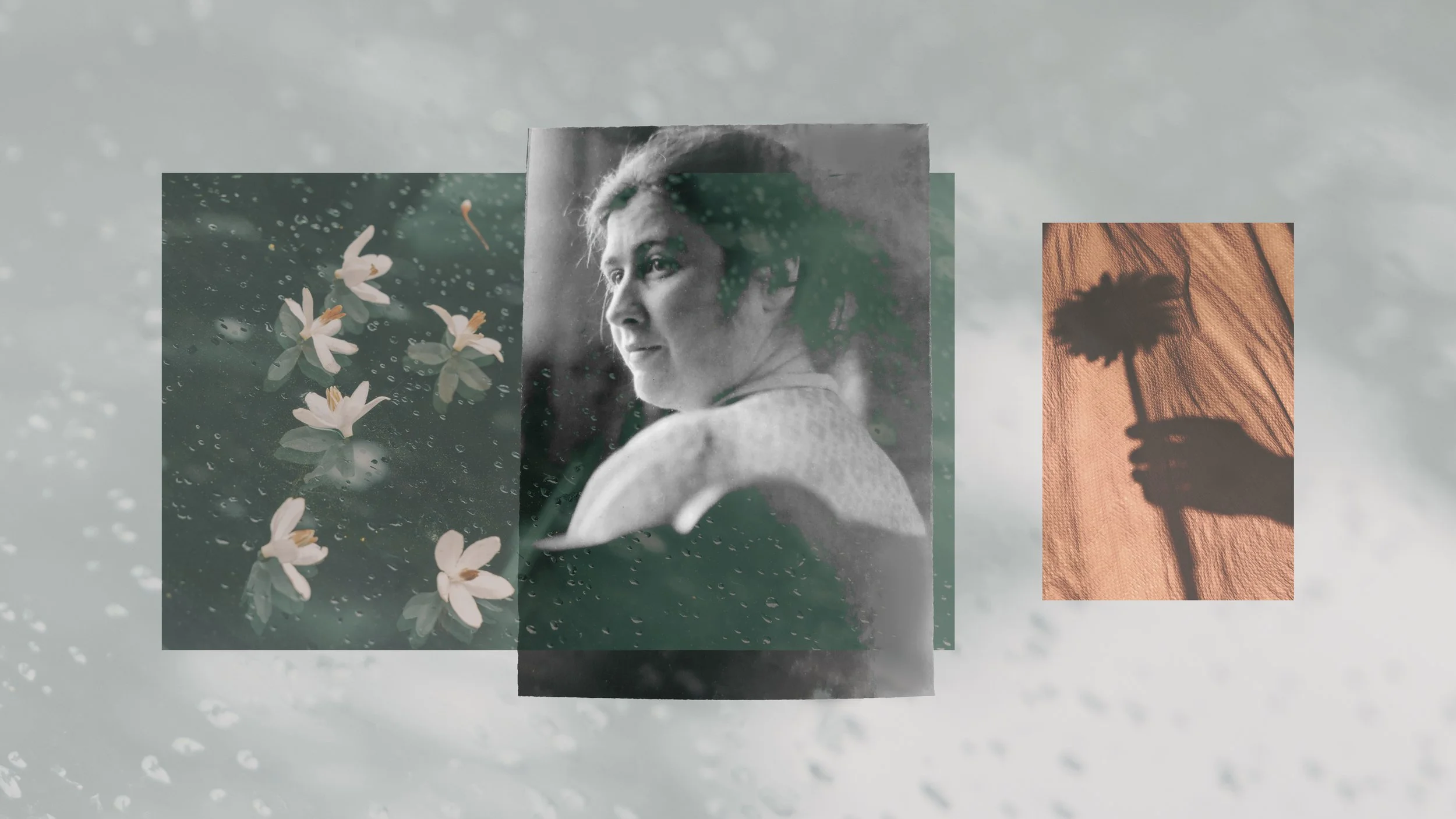
As I looked through the photos of Maggie Victoria, I noticed she almost always turned away from the camera, even when she knew she was being photographed. She is often pictured by her husband doing some form of work or in her quiet moments. I'm conscious that what we are left with is Frank's view of her, yet I know from her letters she had her own life and opinions. It seems she was hardly ever comfortable in the spotlight. I’d like to tell her she deserved to take her place in the sun.
A Slow Speed
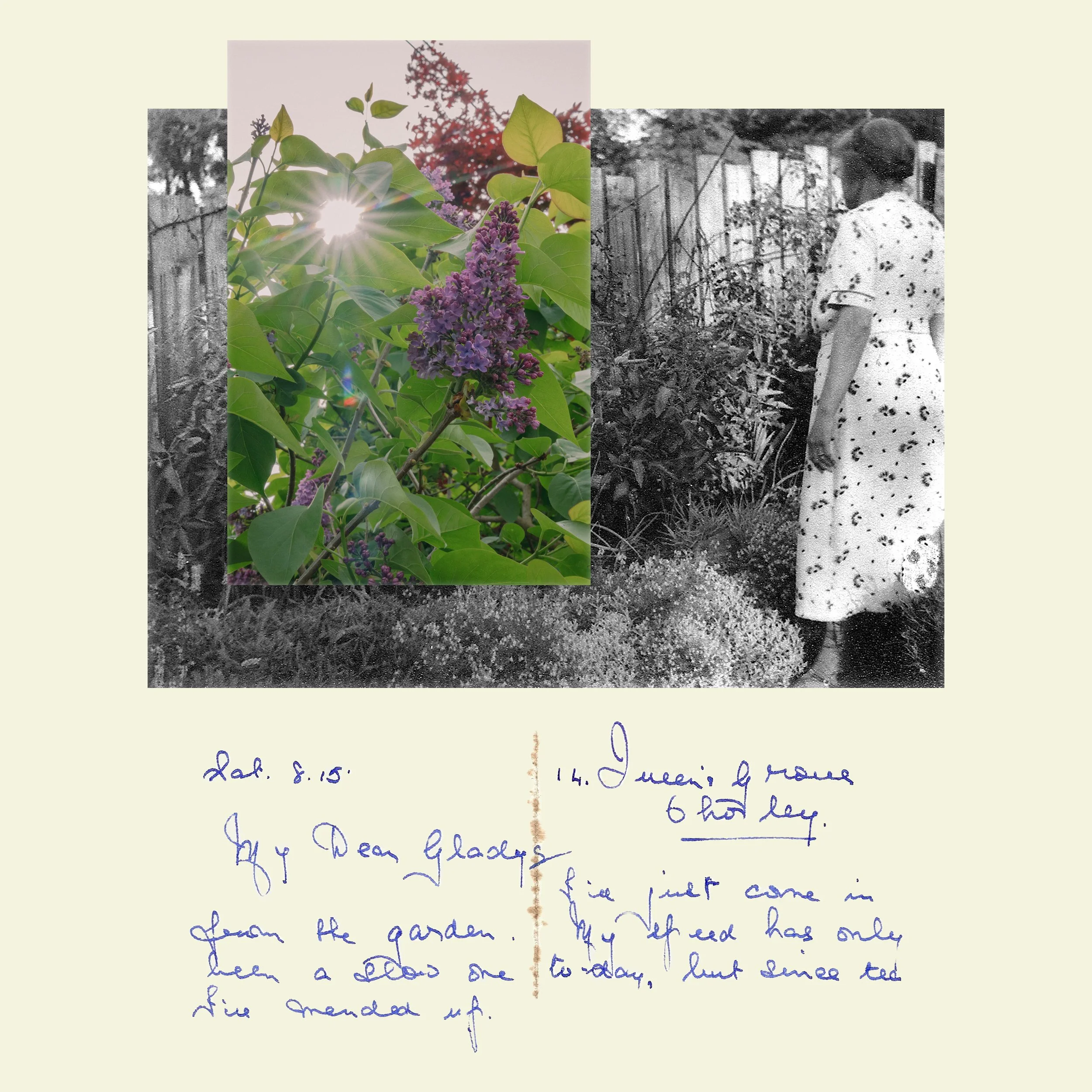
Maggie Victoria was proud of the garden she and her husband Frank created at their Lancashire home. In a letter to Gladys, her eldest daughter, we see the first signs of her failing health - a month before her death. She talks of her speed working in the garden being only “a slow one to-day”.
A Capable Woman
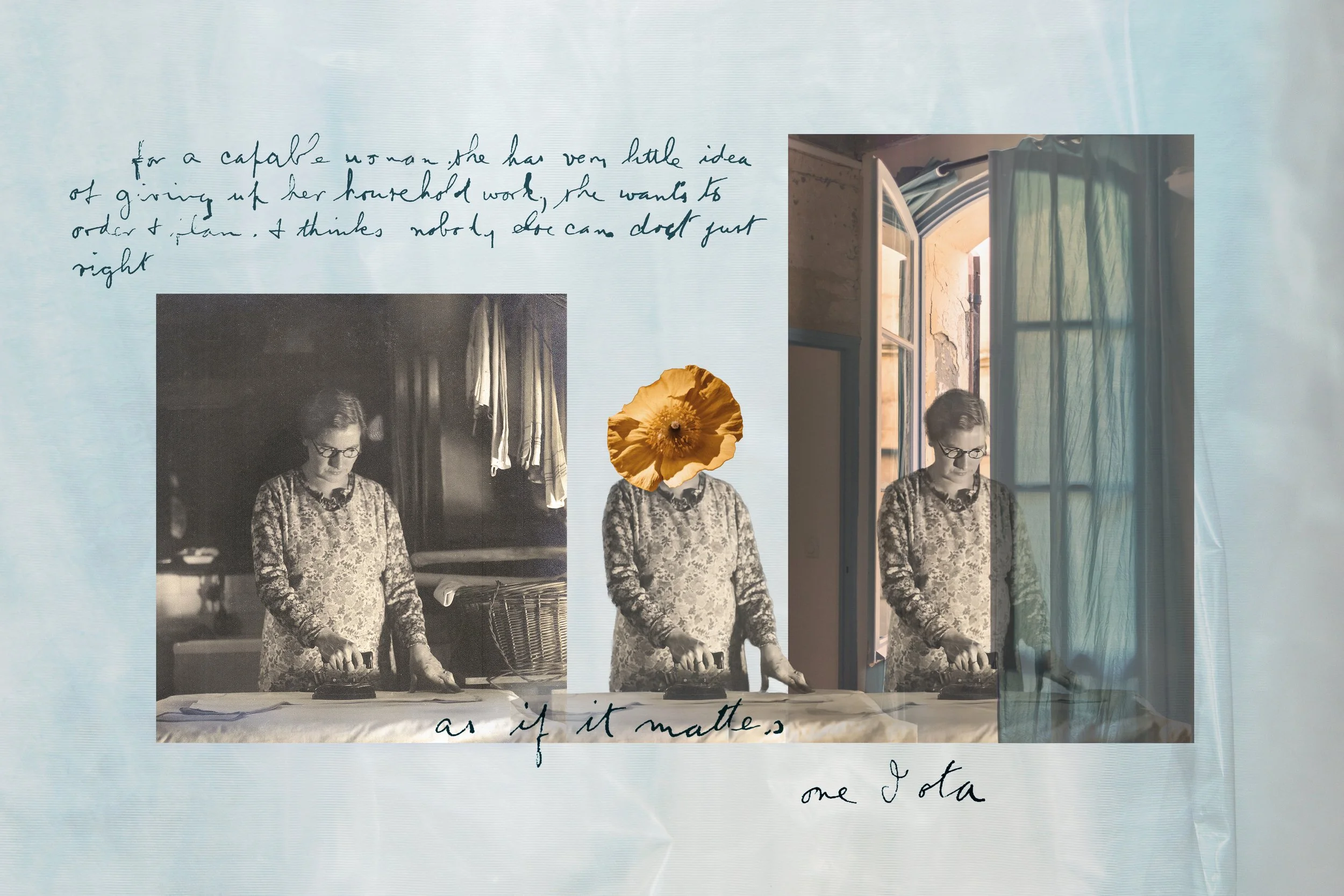
This photo of Maggie Victoria ironing is one of the first images I ever saw of her, and it is striking that she is pictured doing housework - a theme that is familiar throughout Frank's images. In one of his letters to his eldest daughter, Frank expresses alarm that his wife insists on keeping the house in order even though she is ailing. He writes: "For a capable woman, she has very little idea of giving up her household work, she wants to order + plan + thinks nobody else can do it just right as if it matters one iota."
“We Take Too Much From Mothers”

"I am afraid my Dear that we take too much from mothers, take too much for granted and allow them to work too hard." An extract from a letter sent by "Uncle John" in Australia to my grandmother on learning of the tragic early death of her mother Maggie Victoria - his sister and my great-grandmother - in 1943. This piece uses an archive image of Maggie Victoria (standing) in her living room with some of her grown children - and yet removed in anticipation of her imminent absence.
The Last Photo
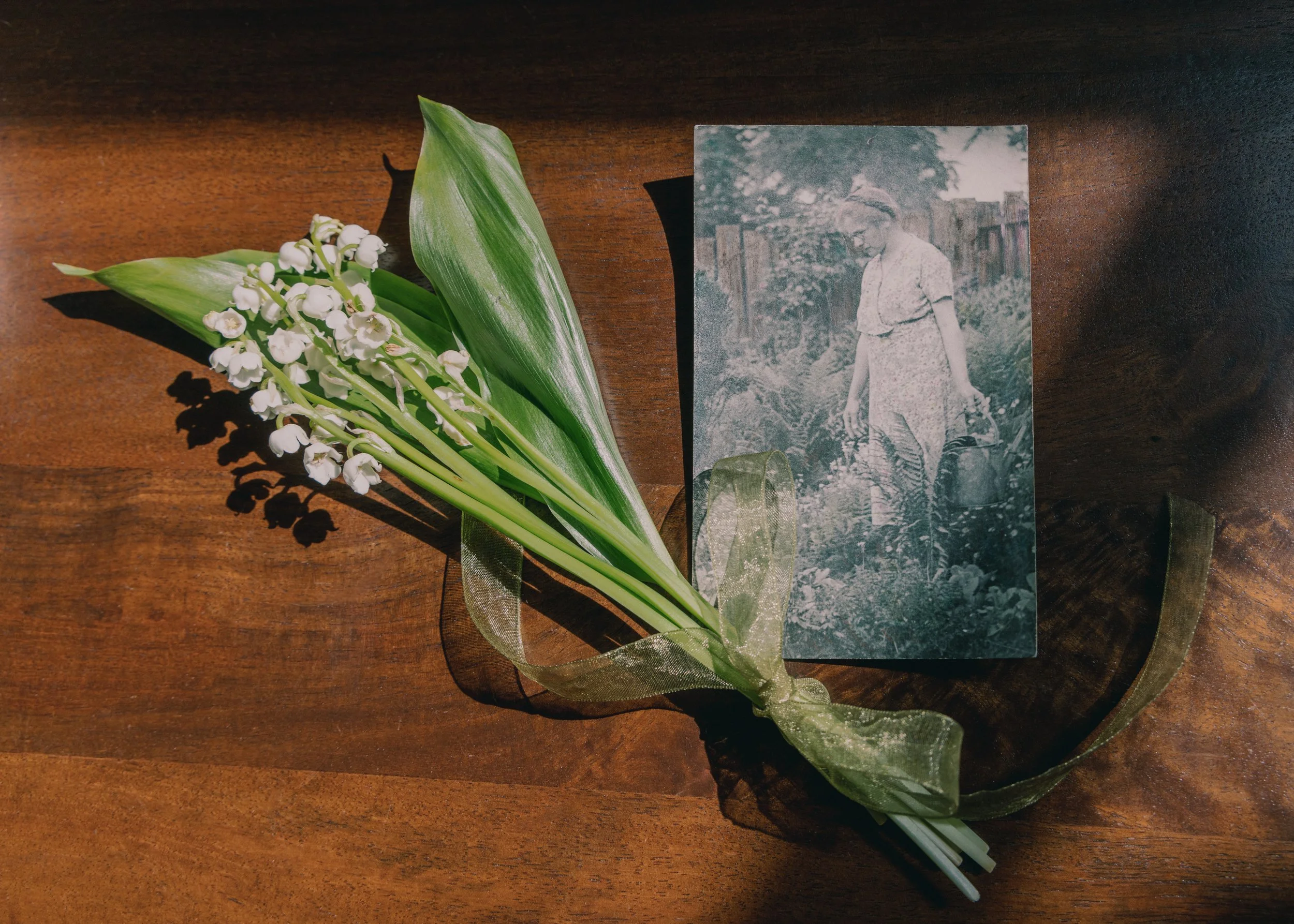
The very last photo that Frank took of Maggie Victoria, tending to her garden. Her nurse wrote a letter to Maggie Victoria’s eldest daughter Gladys just a couple of days before her mother’s death. In it, she wrote that the “beautiful perfume” of two vases of lily of the valley were flooding the bedroom where her patient was resting.
And Then There Were Four

A copy of Maggie Victoria’s will, certified after her death. She divided her estate between her four surviving family members: her three children and her husband, Frank. She wrote the will during a spell in hospital in late 1941. I cannot imagine being so ill that it seemed urgent to put one’s affairs in order - and to have to face that fact. The will is also striking to me in its brevity and simplicity: beyond her savings, some jewellery and a life insurance policy for her son, she did not list any other material belongings to bequeath. Ginkgo leaves may at first seem like a strange choice to accompany Maggie Victoria’s will, since they are, amongst other things, symbolic of longevity. During an autumn walk in Vancouver, I chose one for each of the family members, and also to represent the endurance of the family, passing legacies of various kinds from one generation to the next.